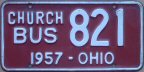
 |
|
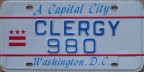 |
|
|
|
|
This page addresses distinct license plates issued specifically to vehicles owned by churches and charities, members of the clergy, members of specific churches and church-affilliated organizations, and for church-related special events. Latest noteworthy updates to this page
|
|
This page is about various kinds of real, government-issued, church-related license plates. These are organized into several broad categories as indicated on the page menu above.
I'd like to state up front that I've established some boundaries on what I'm interested in and collect, and therefore also on what I'm trying to cover on this page.
Church-related plates are a fairly obscure license plate category, so the available information about such plates is often pretty sketchy. No doubt, I've gotten some of the facts wrong, and there almost certainly must be church-related plate types out there of which I'm not even aware. If you can provide any additional or clarifying information, and especially if you can provide a plate or a photo of plate, please let me know.
By far, the most common church-owned vehicle type has to be the church bus. A handful of states have issued distinct license plates specifically for church-owned buses for many decades.


1941, 1946, and 1947 Michigan church vehicle plates. (Morrison photos and plates)
Between approximatley 1925 and 1948, Michigan issued plates for state, county, and municipal government-owned vehicles on which the name of the specific goverment body, and often the specific agency or department within that body, was embossed on the plate. By 1941, if not sooner, the state was also issuing similar plates for church-owned vehicles. These plates likewise had the name of the specific church embossed on the plate, as shown in the examples above. (That symbol above the two-digit years is actually the state abbreviation "MICH", with the letters arranged vertically and compressed so that they overlap each other.)
This all apparently ended in about 1949, when the state began issuing generic state government and local government plates. The local government plates didn't actually have identifying text such as "county", "municipal", or "government" on them, so it's possible that they were also issued to vehicles owned by churches and other charitable groups.
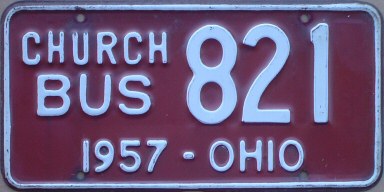

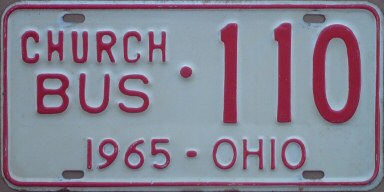
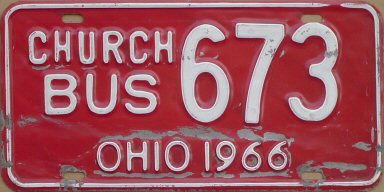
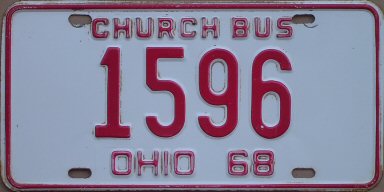
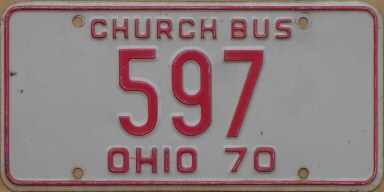
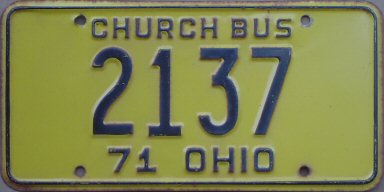
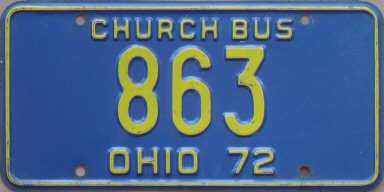

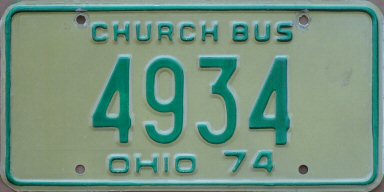
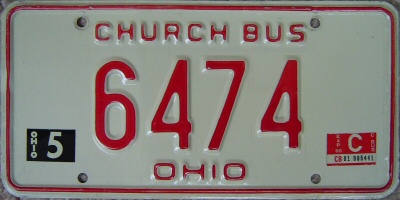
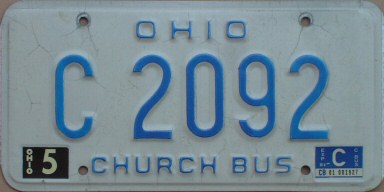
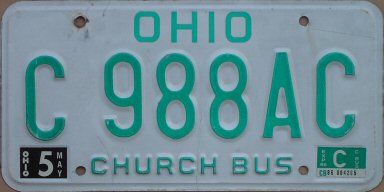
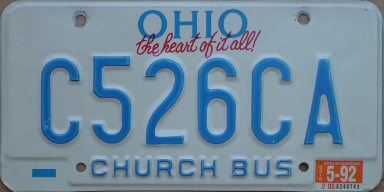
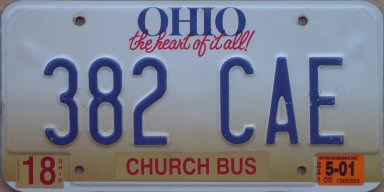
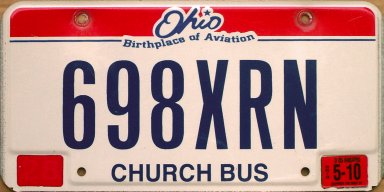

Ohio church bus plates from various years, 1957 to 2011. The stickered plates indicate
1980, 1981, 1986, 1992, 2001, 2010, and 2011 expirations, respectively
(2011: Kleinfelter plate).
As far as I know, Ohio was the first state to issue plates specifically for church buses in 1949, and they still do. Although it's hard to see the years, even on the larger version of the pictures, the three plates shown above with a "C" sticker in their lower right corners have natural May 1980, May 1981, and May 1986 expirations, respectively. These three plates plus the other sticekered plates shown above, and a May 1975 plate once in my collection, lead me to believe that all Ohio church bus registrations expire in May. The 2001 plate shares its numbering format with several other low-volume plate types, and a sticker is applied to the bottom center of the plate to identify the specific plate type. The 2010 and 2011 plates share their format with both low-volume standard plates and graphic specialty plates, and both the plate number and the plate type text at the bottom are screened.
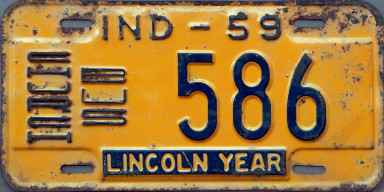
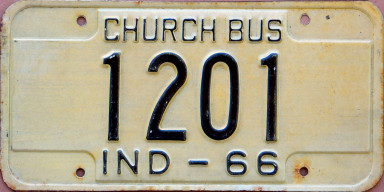
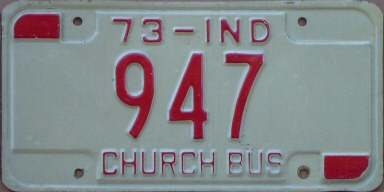
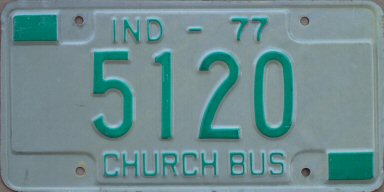
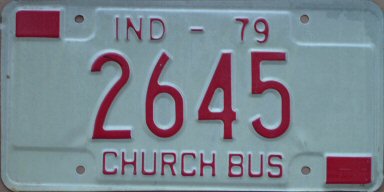
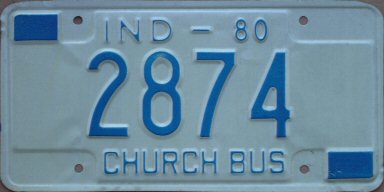
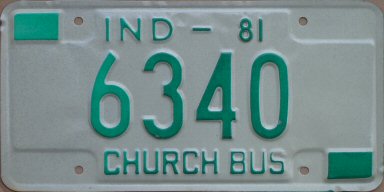
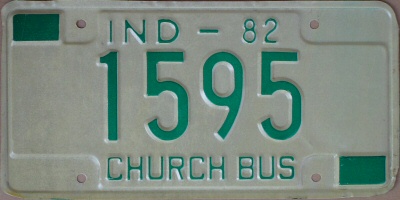
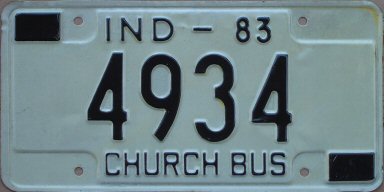

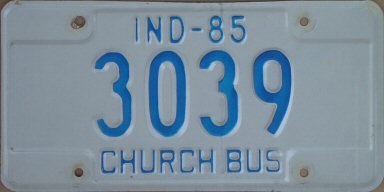
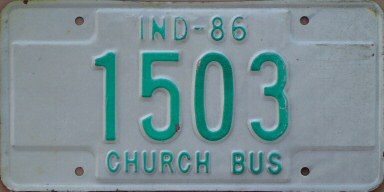
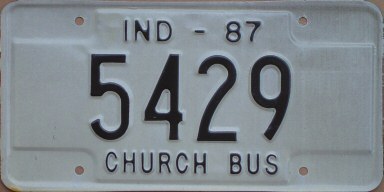
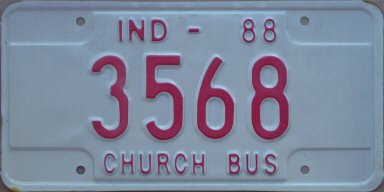
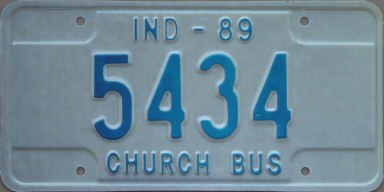
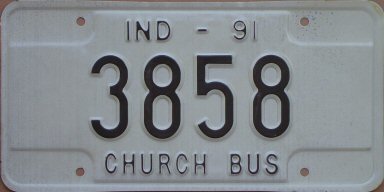
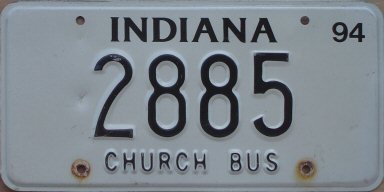
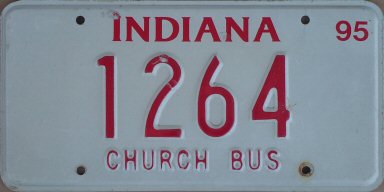
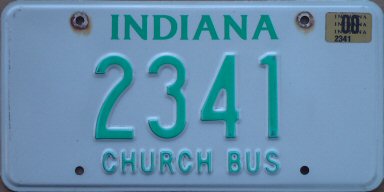
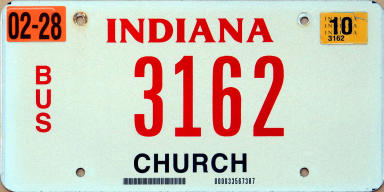
Indiana church bus plates from various years, 1959 to 2010.
States tend to imitate their neighbors when it comes to license plates, and so Indiana followed suit by introducing their own church bus plates in 1951. They also continue to issue them today. The embossed, painted rectangles in opposing corners on the 1973 through 1983 plates were a unique feature once used to easily identify plates from Indiana, even at distances too great to read the state name or abbreviation.
I'm not sure when Indiana stopped issuing new church plates every year and went to a multi-year base plate validated with a year sticker. The plate with the "00" sticker shown above appears to only have the one sticker affixed, so I'm guessing the plate itself may have the year "99" on it underneath the sticker. Neither am I sure how long this base plate was renewed before being replaced with a subsequent version.


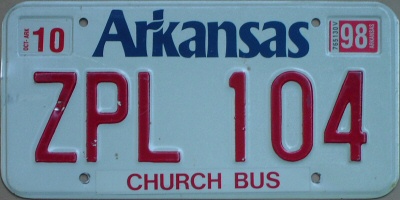
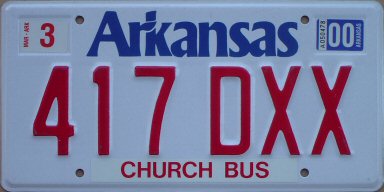
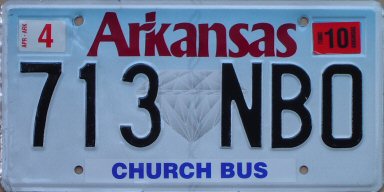
Arkansas church bus plates expiring in various years, 1979 to 2010.
Arkansas has issued church bus plates since 1960. The 1994 plate shown was issued some years prior, as it has a stack of renewal stickers attached. I'll guess that it was issued sometime in the mid-1980s. The words Church Bus are embossed on both the 1979 and 1994 plates.
The 1998, 2000, and 2010 plates shown appear to be basically passenger car bases with Church Bus stickers apparently covering the legend The Natural State that would normally be visible. In recent years, this is how Arkansas has issued plates for low-volume non-passenger vehicle classes.
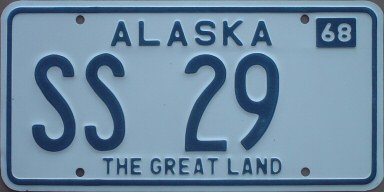
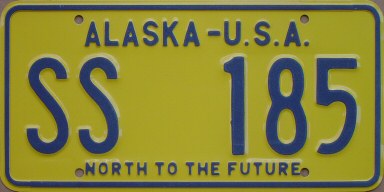
1968 and early 1970s Alaska Sunday school bus plates
There isn't a lot of information available about Alaska Sunday school bus plates. They're reported to have been issued as early as 1962, but I haven't been able to confirm that; the earliest I've encountered were dated 1966. Sunday school bus plates may be identified by an "SS" serial prefix, or possibly an "S" prefix, depending on the year. These plates never had any legend that identified the plate type.
My hunch is that Alaska chose the term "Sunday school bus" and the "SS" prefix, rather than the more common term "church bus" and the obvious "CB" prefix, because "CB" was already being used, or was about to be used, for commercial bus plates.
The undated yellow plate appears to be an unissued, leftover plate from the 1970-1975 period; it looks particularly similar to passenger car plates issued between 1970 and 1972. While passenger car plates from this period had the year stamped on them, used year stickers, or both, I don't know whether or not Sunday school bus plates were validated with year stickers.
Beginning in 1976, Alaska has issued "exempt" plates to vehicles owned by churches as well as other nonprofit organizations. These seem to have replaced Sunday school bus plates, as well as possibly some additional plate types. They're addressed in the charitable vehicle plates section, below.
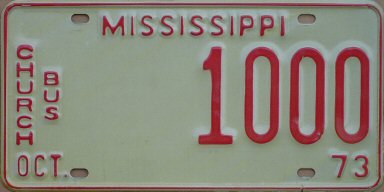
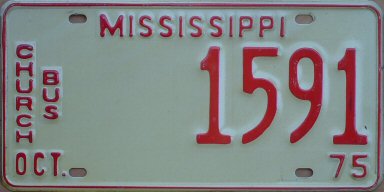
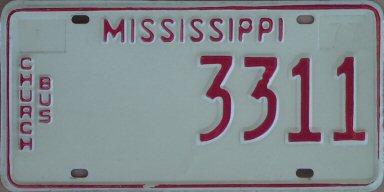
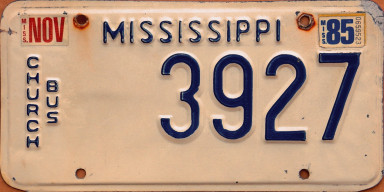
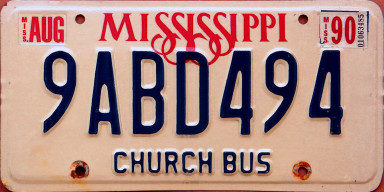
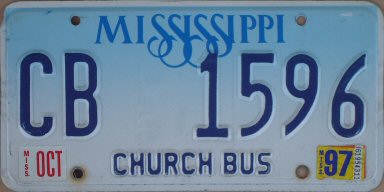
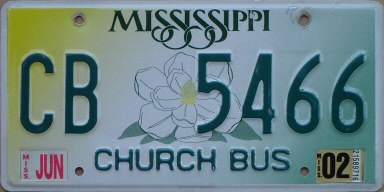
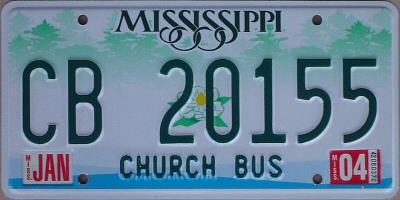
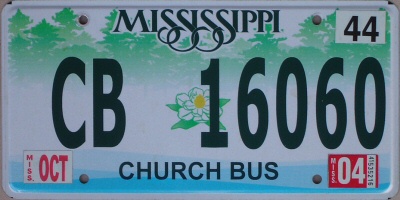
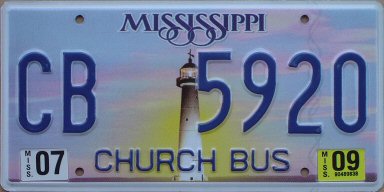
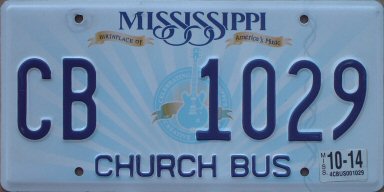
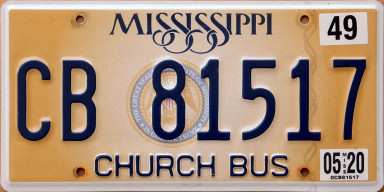
Mississippi church bus plates expiring in various years, 1973 to 2020. The undated, unstickered plate expired in
October 1977.
Neigboring Mississippi followed Arkansas' lead by introducing their own church bus plates a few years later, and they continue to do so today. Probably the first plates were issued in the fall of 1963 and indicated an October 1964 expiraiton. Church bus plates were issued annually through the October 1976 expiration plate. The apparently undated red-on-white base plate above actually has the expiration year "77" lightly etched in the sticker well in the upper right corner. It was obviously intended to be overlaid with year stickers in subsequent years.
Also pictured are two different examples from the 2002 base, showing how Mississippi converted from embossed to flat serial numbers on some of their non-passenger plate types during the lifespan of this base. It looks like they also went back and re-used older plate numbers, too. The "44" sticker on the flat plate identifies the bus as having been registered in Lowndes County. The "49" sticker on the 2020 expiration plate is for Montgomery County.

Undated South Dakota church bus plate from approximately 2004 or 2005.
I didn't know South Dakota had church bus plates until I saw this one for sale. It's actually a generic bus plate with a sticker in the upper right corner that reads "Church". It would seem that South Dakota began using these stickers to indicate various types of buses. There's no expiration sticker, leading me to guess that the registrations are permanent.
This basic design was used between 1995 and 2005, but the state only switched from embossed to flat plate numbers in about 2004. I believe this design was replaced with a different one in 2006.
A few states have distinct license plates for vehicles owned by charitable organizations, including churches. Probably the vast majority of these plates are actually issued for church buses, hence my interest in them. However, these various plate types – charitable vehicle, no fee, tax exempt, etc. – tend to be rather obscure and are poorly documented by plate historians and spotters of current plates alike. A good number of states issue some sort of "exempt" plate, but frequently these are issued for government-owned vehicles, rather than for vehicles owned by charitable organizations.
Listed and show below are some charitable and nonprofit organization-owned vehicle plate types for which I have some pretty solid information. There may also be others that I'm just not familiar with.
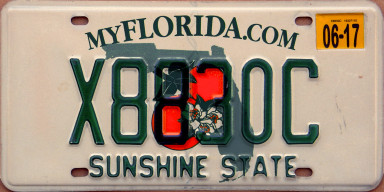
2017 Florida tax-exempt plate
Florida wins the prize for the oldest continuous charitable vehicle plate type. Ever since 1918, these plates have been identified with the letter "X", either as a prefix, a suffix, or following the prefix numbers "68" or "90". Normally, prefix numbers indicated counties, but Florida only has 67 counties. It used the number 68 for plates issued at the state level, and the number 90 for replacement plates. Back in the days of annual painted plates, tax-exempt plates usually had opposite colors from other plate types from that year. On graphic, reflective-background plates, tax-exempt plated were first issued in format X00000, and then when that ran out of numbers, format X0000x, where the suffix letter is variable. When the county name was always stamped on Florida plates, tax-exempt plates had the text DMV instead.
Rumor has it that, besides churches and charitable organizations, tax-exempt plates are now also issued to various elected officials, members of the National Guard and military reserves, and selected military veterans. In other words, anyone whom the state legislature has deemed exempt from paying taxes on their vehicle. I don't how long these various groups have qualified for tax-exempt plates.

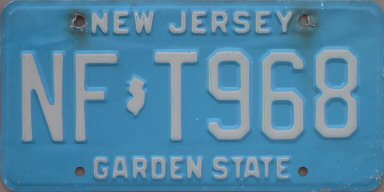
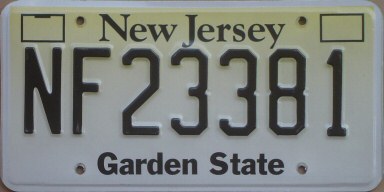
New Jersey no-fee plates issued in the 1960s, 1980s, and 2000s.
New Jersey no-fee plates have been around since at least the mid-1930s. They've been consistently made with the letters "NF" as either a serial prefix or suffix. No-fee plates are issued for vehicles owned by various charitable or otherwise tax exempt orgainzations, including churches. I distinctly recall seeing one of these on a church bus in the 1980s, and without knowing exactly what it was, realized it wasn't a normal passenger plate – the serial separator was in the "wrong" place, since at the time these plates had the serial format NF-x000.
Nowadays, standard issue no-fee plates have serial format NF00000, but they're also available as vanity plates and as "courtesy" plates issued to political patrons. Regardless, they always start with the letters "NF".
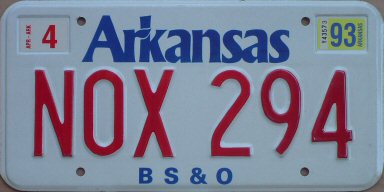
1993 Arkansas Boy Scout & orphanage bus plate
Okay, I realize that although these plates may be for charitable and nonprofit organization vehicles, they have no direct connection to churches. Nevertheless, I'm including them here because, as a former Boy Scout myself, I think this is a pretty interesting plate type. What prompted Arkansas to lump Boy Scout buses and orphanage buses into a distinct and single plate category, I have no idea. From what I understand, buses owned by other youth orgnizations, including the Girl Scouts, are also issued these same plates.
In the early years, Arkansas Boy Scout & orphanage bus plates had a BSO serial prefix; later, they had the legend B S & O at the bottom of the plate. That legend is screened onto the 1993 expiraiton plate shown.

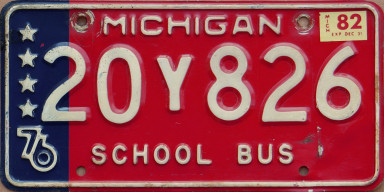

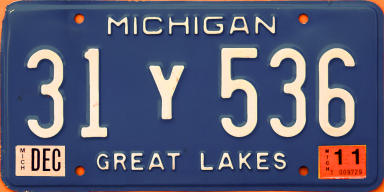
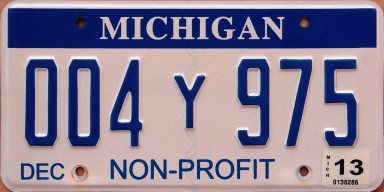
1966-1975 Michigan non-profit vehicle plate; two of several versions of 1976 Michigan non-profit vehicle plates; 2011
and 2013 Michigan non-profit vehicle plates.
Michigan currently issues what it calls "non-profit" plates for certain vehicle types owned by non-profit and charitable groups that meet very specific eligibility criteria, as well as private schools, church Sunday schools, and the Civil Air Patrol. These plates are identified with a small "Y" as part of the serial number.
Older "Y" plates are much more confusing. Apparently, the first such plates were issued in 1966. They were undated, but had the same navy on tan color scheme as regular 1966 plates, and had a small "Y" inside a diamond. These were reported to have been used continuously through 1975. Several types of "Y" plates were reported to have been issued on the 1976 base, including one with the "Y" inside the diamond, one shown above with a small "Y" and no diamond, one with a small "Y" and no diamond with the legend Nonprofit Plate, and one shown above with a small "Y" and no diamond with the legend School Bus. At least some of these were made without the embossed "76" in the lower left corner. I have no idea what the significance of these different versions might have been. The 1976 non-profit plates were used well beyond the three years that 1976 Michigan plates were used for most other types of vehicles, I believe until the mid-1980s.
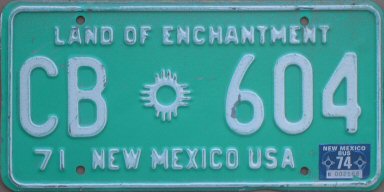
1974 New Mexico charitable bus?
There's not much information about the various types of New Mexico bus plates, but they apparently have issued bus plates with a "CB" serial prefix since at least 1966. There's contradictory information regarding whether "CB" stands for commercial bus, church bus, or charitable bus. The most reliable source, the New Mexico DMV, currently describes the "CB" plate type as being for buses used exclusively for "religious or nonprofit charitable organizations", so I'll go with "charitable bus". Probably most of these are issued to church buses in actual practice.
But the plot thickens. I've discovered that "CB" plates on the 1968 base were issued 1970 renewal stickers that bore the legend Commercial Bus. The 1971 base plate shown above has a 1974 renewal sticker that simply says says Bus, so obviously, it's unclear exactly what type of bus this plate was used for. Partly because I've seen so few New Mexico "CB" bus plates, from any year, I have no basis to say when the "CB" prefix stopped being used for commercial buses and started being used for charitable buses.
Even if I did see more examples of these, I still might be faced with ambiguity such as is found on the 1974 expiration plate above. One clue I'd like to nail down is when the current Passenger Bus plate type began; it apparently replaced the Commercial Bus plate type.
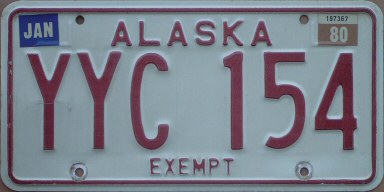
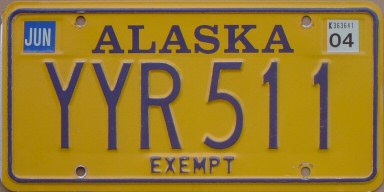
1980 and 2004 Alaska charitable exempt vehicles
As near as I can tell, Alaska Sunday School bus plates were merged into this plate category. What the Alaska DMV calls "charitable exempt" plates are issued for vehicles owned by charitable and nonprofit organizations, church or religious organizations, and Alaska native tribal village councils. These plates usually have the word Exempt at the bottom of the plate, but regardless, can be identified based on their serial format YYx 000, with or without the space separator. The red-on-white base was used from 1976 until the early 1980s; since then, a navy-on-yellow base has taken its place.
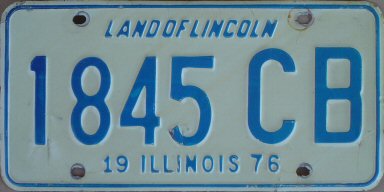
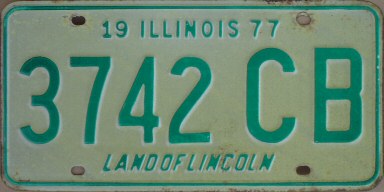
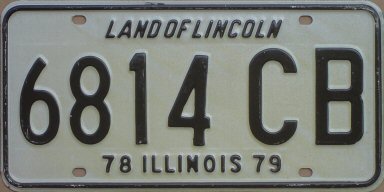
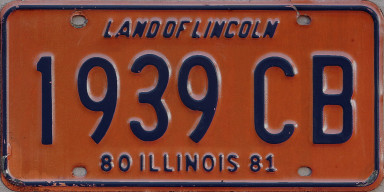
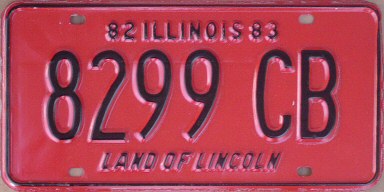
Illinois charitable bus plates from 1976, 1977, 1978-79, 1980-81, and 1982-83.
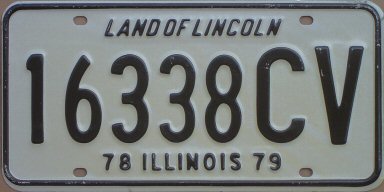

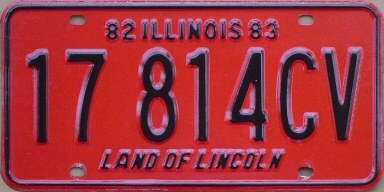
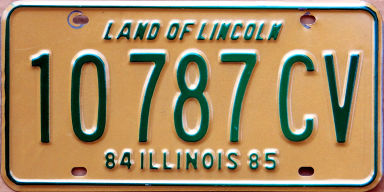
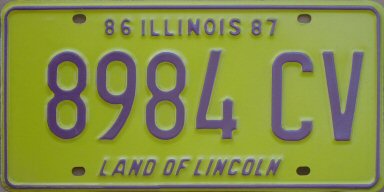
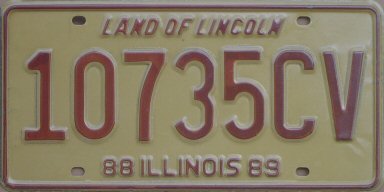
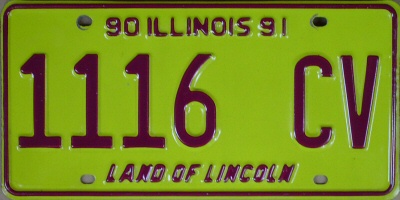
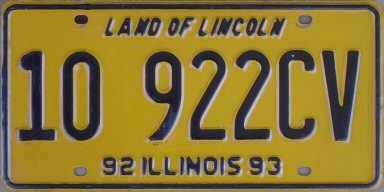

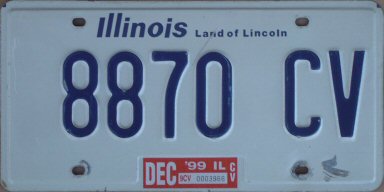

Illinois charitable vehicle plates dated from 1978-1995;
1996 base plate showing 1999 expiration; 2002 base plate with 2009 expiration.
Illinois charitable plates are not just for church-owned vehicles, but I've spent time in Illinois, and the vast majority of these plates that I've seen in use are issued for church buses.
CB-suffixed "charitable bus" plates were introduced in 1976. It's been long reported that CV-suffixed "charitable vehicle" plates were introduced at the same time. But in nearly twenty years of searching, I've yet to uncover one shred of evidence that CV plates existed prior to 1978.
CB plates were issued to buses owned by charitable organizations, including but not limited to churches, while CV plates were originally used on both cars and trucks owned by such organizations. I don't know which plate type would have been issued to a passenger van, but one report I've seen said that CB plates were for vehicles with a capacity of eleven or more passengers. That would mean that a passenger van could get either type of plate depending on how many seats it had. Anyway, charitable plates were issued as single-year plates in 1976 and 1977, and then as biennial plates (good for two years) beginning in 1978.
The last CB-suffixed plates were dated 1982-1983. Starting in 1984, cars were no longer eligible for charitable plates, and charitable buses, trucks and passenger vans were all issued CV-suffixed plates, including minivans and full-sized vans with fewer than eleven seats. Biennial plates continued to be used thorough 1995. Since then, base plates have been used, and renewed with stickers indicating the expiration month and year. These renewal stickers are also good for two years at a time, and always indicate an expiration of December in odd-numbered years.

1999 Nebraska tax-exempt
Nebraska introduced this plate type by 1984 or possibly a year or two prior. They're issued to vehicles owned and used exclusively by an agricultural and horticultural society, a cemetery, or an educational, religious, or charitable organization. Such vehicles are exempt from paying motor vehicle taxes. These plates have always been very plain looking. The tax exempt plates with 2000 to 2005 expirations merely said Exempt on them.
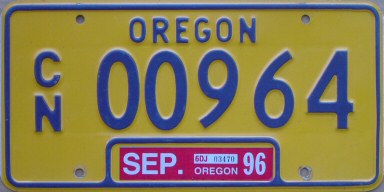
1996 Oregon charitable/non-profit vehicle
Oregon has for at least two decades issued specific plates to trucks and buses over 8,000 lbs. G.V.W. that are owned and used by "charitable or non-profit" organizations. The serial letters C/N are constant, and the plate design with the large sticker box is that used by Oregon for what they deem to be "heavy" vehicles.
There seems to be unusually scant information available about this plate type, and so I was unaware of its existence much longer than church- and charitable-related plates from other states. This is apparently the only design of this plate type, though different serial dies have been used.
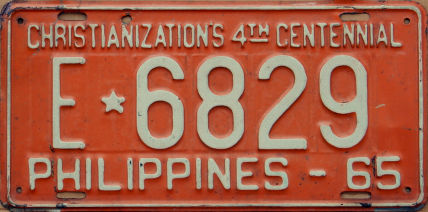
1965 Philippines tax exempt vehicle
Though I primarily collect U.S. plates, I'm happy to acquire foreign plates that align with my collecting interests. In the 1960s and -70s, at least, Philippines plates with an "E" serial prefix were issued to "tax exempt" vehicles. Since the Philippines had another plate type specifically for government vehicles, I'm working on the assumption that tax exempt plates were issued to vehicles owned by churches and charities. It's a bonus that this one also celebrates Christianity itself. Most, if not all, 1965 Philippines plates proudly proclaimed (in English!) that year to be Christianization's 4th Centennial. I presume the event being celebrated was the arrival of Spanish missionaries in the year 1565, who did what missionaries do, and proceeded to convert the native population to Christianity. It would seem that 400 years later, Filipinos still considered that to be a good thing.
A couple of jurisictions are reported to have issued special license plates to members of the clergy; these would be somewhat akin to other "professional" license plates that some jurisdictions issue to medical doctors, press photographers, and the like.
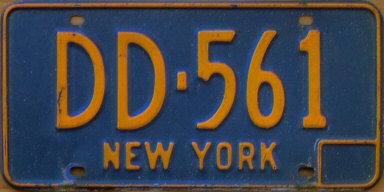
Undated New York Doctor of Divinity plate, circa 1966-1973
In past decades, New York apparently issued plates with registration numbers containing the letters "DD" to motorists who held a Doctor of Divinity degree; most such individuals would certainly have been members of the clergy. Some have speculated that this wasn't a distinct type of plate, and that "DD" plates were actually nothing more than vanity plates. Such plates were otherwise unremarkable, and so without provenance or some sort of firsthand confirmation, it's impossible to nail this down. If New York ever did issue Doctor of Divinity plates, they apparently don't any longer.
This orange-on-blue plate design was issued and used between 1966 and 1973. During 1966, both plates were used without expiration stickers, but in subsequent years, a sticker was applied to only the rear plate, leaving the front plate stickerless. Based on its condition, I suspect this plate was a front plate used for multiple years.

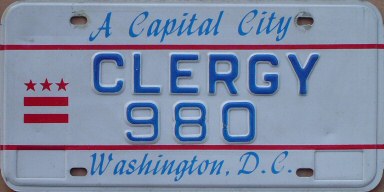
1984 District of Columbia clergy plate (La Camera photo / plate); undated
District of Columbia clergy plate.
Since 1975, Washington, D.C. has issued plates that proudly proclaim the motorist to be a member of the clergy. The A Capital City base plate, manufactured between 1984 and 1991, is the most recent base on which the clergy plate type has been observed. The plate shown above shows obvious signs of use, but yet shows no evidence of month and year stickers ever having been affixed. Until 2002, D.C. issued plate expiration stickers on both front and rear plates, but since then has instead gone to windshield expiration stickers for most plate types. Therefore, it's almost guaranteed that this plate was issued and put into use no earlier than 2002. Apparently the D.C. DMV had (and may still have) quite a stockpile of unissued A Capital City clergy plates.
A number of states have issued organizational plates for members of the Knights of Columbus, which is a Catholic men's organization. Maryland currently issues a multitude of graphic organizational plates (only 25 orders are needed to create plates for a new organzation), and some church denominations and even individual church congregations have obtained organizational plates that are available to their members. Other states have also issued various organizational member plates for members of churches and church-related organizations.
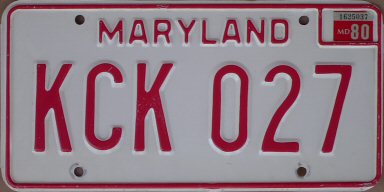
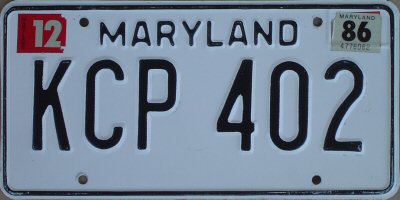

1980 and 1986 Maryland reserved-series passenger car plates issued to members of the Knights of Columbus;
1988 Maryland Knights of Columbus organzational member plate (Kunsman plate).
Back before graphic organizational plates became all the rage, Maryland reserved certain passenger plate prefixes for members of specific organizations. The "CC" series was reserved for members of the Knights of Columbus from 1954 to 1975; the "KCx" series was likewise reserved from 1976 to 1987. Shown above are two examples of the latter series. On the red-on-white base, regular, sequentially-issued passenger plates didn't get past the "H" series.
Fron 1986 until probably the early 1990s, Maryland made non-graphic plates available to memebers of various organizations; the name of the group was usually screened at the bottom edge of the plate. Shown above at right is one such plate issued to a member of the Knights of Columbus.
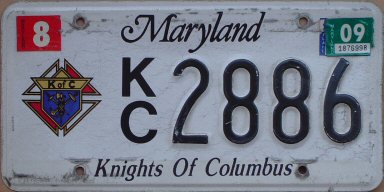

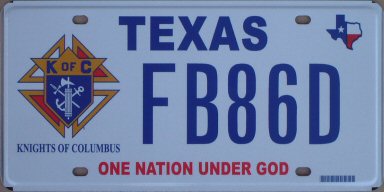

Graphic Knights of Columbus member plates from Maryland, North Carolina
(Casadonte photo / plate), and Texas; Maryland graphic organizational member plate for
Queen's Chapel United Methodist Church
(Jackson photo of plate in actual use).
Many states issue graphic Knights of Columbus organizational member plates, including Maryland, North Carolina and Texas, as shown above. Maryland also issues numerous other organizational plates available to members of church denominations, specific church congregations, and church-related organizations, such as the example shown above. Other such plates include: Allen A.M.E. Church, The Episcopal Church, Catholic Daughters of the Americas, Church of God, Faith United Baptist Church, First Baptist Church of Highland Park, and so on.
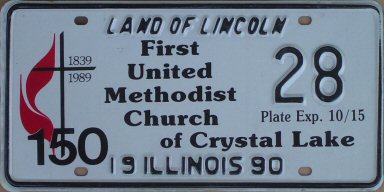
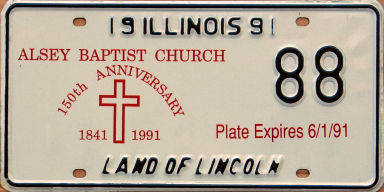
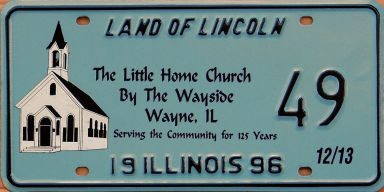
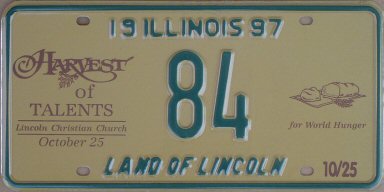
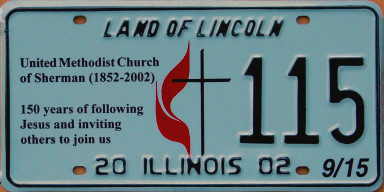
Illinois church-related speical event plates from 1990, 1991, 1996, 1997, and 2002.
Illinois issues an endless stream of special event plates promoting all kinds of events, everything from the Chicago Bulls winning the NBA championship to local town fairs. These are real license plates that are valid for street use for up to 60 days ending on the date shown on the plate. Shown above are a few examples of plates that were produced for church-related events.

1995 Maryland papal visit official plate (Gillis photo / plate).
There aren't a lot of these that I'm aware of, but I do know of a couple. One is this awesome 1995 Maryland Papal Visit Official plate. These were not available to the general public, but, as best as I can determine, were issued to vehicles used by Roman Catholic Church officials who were temporarily in Maryland making arrangements for the Pope's visit to Baltimore in October 1995. Another I know exists is a 1991 Indiana Christian Church (denomination) 125th anniversary plate.
Related pages on this site |
Thanks to those who have directly contributed to the information on this page: Jim Moini, Christopher Jackson, Sergio La Camera, George Kunsman, Paul Casadonte, Alan Gillis, and Rick Morrison.
Jackson, La Camera, Casadonte, Gillis, and Morrision photos are presumed to be copyrighted by Christopher Jackson, Sergio La Camera, Paul Casadonte, Alan Gillis, and Rick Morrision, respectively, and are used with permission. Kunsman and Kleinfelter plates are from the collections of George Kunsman and Jeffery Kleinfelter, respecively.
This page is W3C valid |
